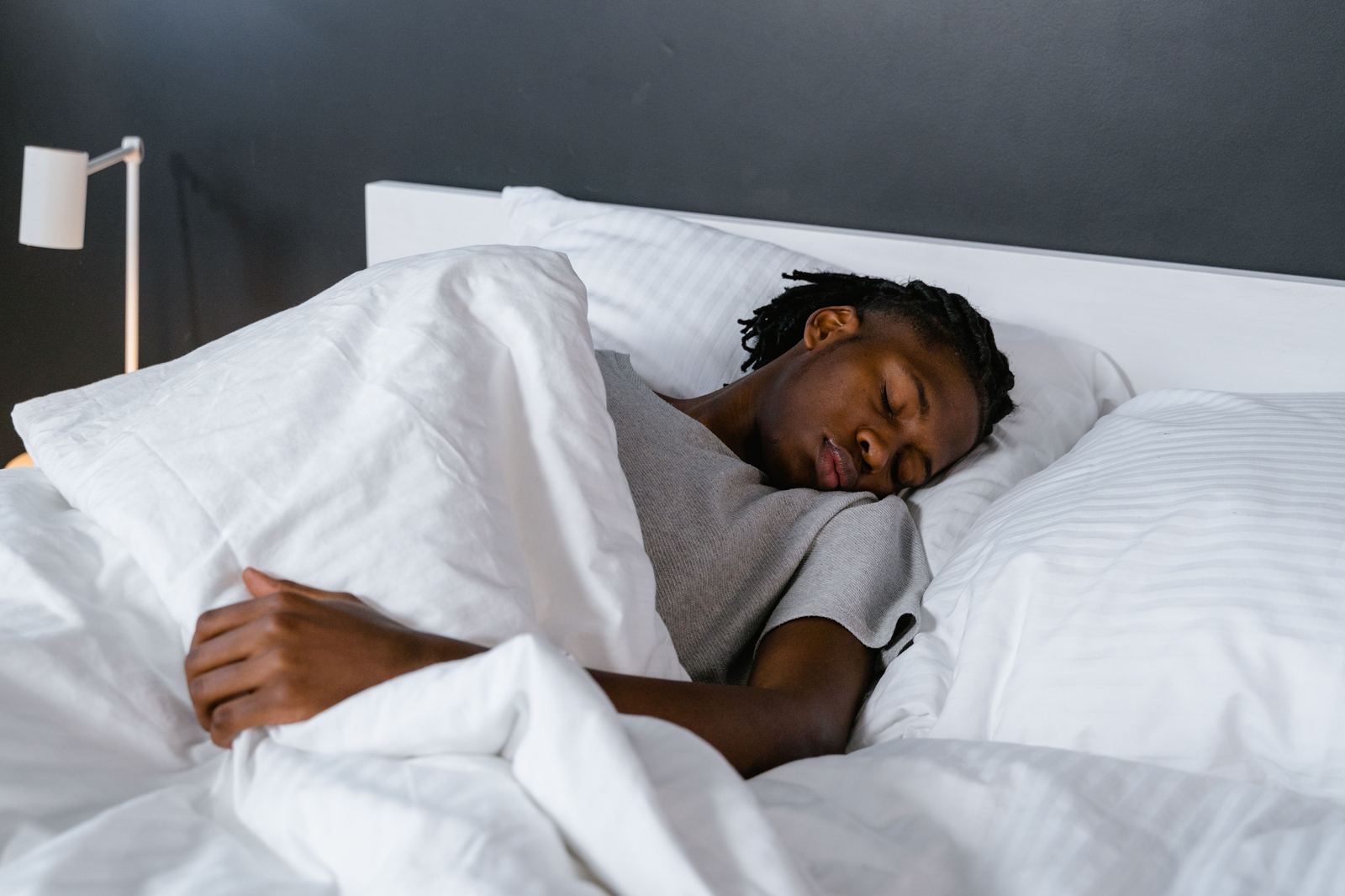
You can have the perfect routine and the perfect diet, but if you sleep poorly, you're holding back your progress just as much as if you skipped the gym half the week.
- Deep sleep is where muscle repairs most — not the training itself
- Poor sleep raises cortisol and lowers testosterone
- 7-9 hours per night is the recommended range for people who train
- A consistent schedule and avoiding screens before bed improve sleep quality
Training is the stimulus — the moment you tell your body "I need to be stronger." But the real reconstruction, where that stimulus becomes muscle, happens while you sleep. Without that process, the gym stimulus is largely wasted.
What happens in your body while you sleep
| Stage | What happens |
|---|---|
| Light sleep | Transition, the body starts to relax |
| Deep sleep | Peak growth hormone release, muscle tissue repair |
| REM sleep | Memory consolidation, including motor memory from training |
Deep sleep (where most muscle repair happens) dominates the early hours of the night — another reason why cutting sleep short from the start costs you more than waking up slightly earlier.
What happens to your progress if you sleep too little
Less muscle protein synthesis
With less deep sleep, the muscle repair and growth process is reduced — even if you trained and ate perfectly that day.
More cortisol, less testosterone
Sleep deprivation raises cortisol (stress hormone) and reduces testosterone production — a combination that makes building muscle harder and storing fat easier.
Worse gym performance
With insufficient sleep, strength, coordination, and reaction time all drop — you train at lower intensity without realizing it.
More hunger, worse food choices
Poor sleep disrupts hunger hormones (ghrelin and leptin), making you eat more and worse the next day.
7 to 9 hours per night is the recommended range for adults who train regularly. Consistently under 6 hours starts to measurably affect muscle recovery.
How to improve sleep quality
Consistent schedule
Going to bed and waking up at the same time every day (yes, including weekends) regulates your biological clock.
Avoid screens before bed
Blue light from your phone delays the release of melatonin, the hormone that makes you sleepy. If you can, avoid screens for the last 30-45 minutes.
Dark and cool room
Total darkness and a cool temperature help you enter deep sleep faster and stay in it longer.
Watch the caffeine timing
Caffeine can still affect your sleep up to 6-8 hours after drinking it, even if you feel like the effect has "worn off."
This article is informational and does not replace the advice of a doctor, especially if you have persistent insomnia or suspect a sleep disorder.
- National Sleep Foundation — sleep and athletic recovery
- Sleep Foundation — how sleep affects muscle recovery