Protein is, without a doubt, the most talked about — and most misunderstood — macronutrient in the training world. The supplement industry has every incentive to make you think you need far more than you actually do.
- 1.6–2.2 g of protein per kg of bodyweight per day is the real range for building muscle
- Eating more than that doesn't speed up muscle growth
- In healthy people, there's no evidence it damages kidneys
- Spreading it across 3–5 meals helps more than chasing the post-workout "window"
Between product labels, gym myths, and contradictory recommendations on social media, it's easy to end up confused about how much protein to actually eat. Here's the real number, explained with the backing of exercise science — no exaggeration in either direction.
The number by goal
The recommended protein amount isn't a single number — it changes depending on what you're trying to achieve with your body:
Sedentary / normal life without training
0.8 g per kg of bodyweight per day. The minimum to maintain basic body functions, with no performance goal.
Recreational strength training
1.4 to 1.6 g per kg of bodyweight per day. Enough to support recovery for someone training 3–4 times a week.
Muscle gain as the main goal
1.6 to 2.2 g per kg of bodyweight per day. This is where most of the scientific evidence sits for maximizing muscle protein synthesis in consistent trainees.
Caloric deficit (cutting) while training strength
2.0 to 2.4 g per kg of bodyweight per day. When you eat fewer calories, higher protein helps protect muscle while you lose fat.
Someone weighing 70 kg training strength with a muscle-gain goal would be aiming for 112–154 g of protein per day (70 × 1.6 to 70 × 2.2).
Reference table by bodyweight
To avoid doing the math every time, here's the recommended daily protein based on your weight, for someone training strength with a muscle-gain goal:
| Bodyweight | Protein per day |
|---|---|
| 30 kg | 55 g |
| 40 kg | 72 g |
| 50 kg | 90 g |
| 60 kg | 108 g |
| 70 kg | 126 g |
| 80 kg | 144 g |
| 90 kg | 162 g |
| 100 kg | 180 g |
| 110 kg | 198 g |
| 120 kg | 216 g |
Calculated at 1.8 g of protein per kg of bodyweight (the midpoint of the 1.6–2.2 g/kg range recommended for muscle gain). If your exact weight isn't listed, use the closest one.
Why "more is always better" isn't true
Past a certain point — generally above 2.2–2.5 g per kg — evidence shows that extra protein doesn't translate into more muscle. The body has a limit to how much protein it can use for muscle synthesis in a day; what's left over simply gets used as energy or stored, just like any other macronutrient in excess. In other words, eating double what you need won't make you gain muscle twice as fast.
What about the myth that it damages kidneys?
In healthy people with no prior kidney disease, there's no solid evidence that a high protein intake (within the ranges above) damages the kidneys. That risk applies specifically to people who already have a diagnosed kidney condition, where any dietary adjustment should be guided by a doctor or nutritionist.
Quality protein sources
Not all protein is equally complete. These are sources with a good amino acid profile:
Animal-based
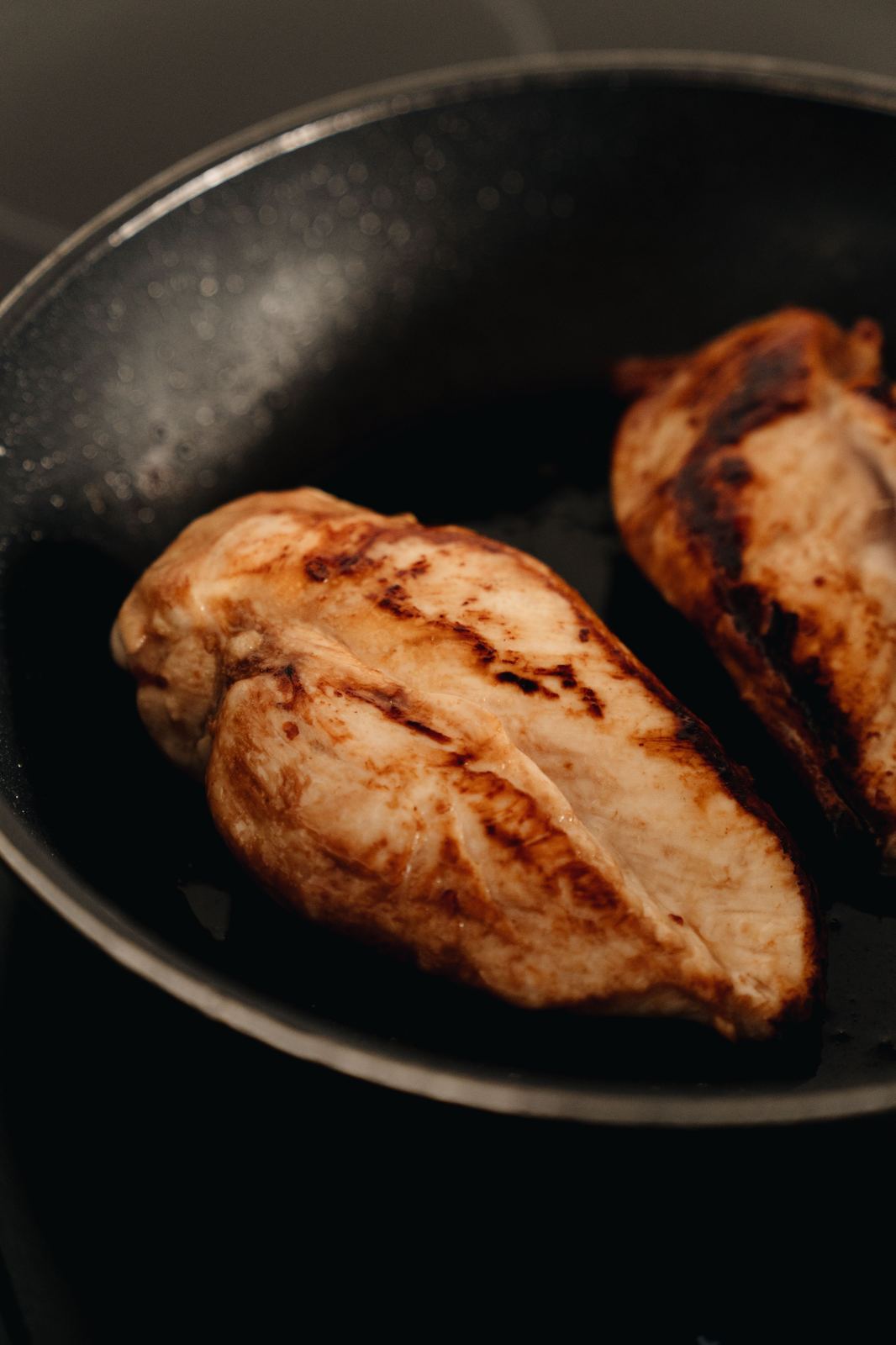
Chicken, fish, eggs, lean beef, dairy (milk, Greek yogurt, cottage cheese) — complete protein, high bioavailability.
Plant-based
Lentils, chickpeas, beans, tofu, edamame, quinoa. Combining several sources throughout the day is recommended to cover all essential amino acids.
Supplements
Protein powder (whey or plant-based) — useful when food alone doesn't get you to your daily goal; not mandatory if your diet already covers it.
Does the time of day matter?
Less than you'd think. What matters most is the total protein for the whole day, not whether you eat it "right after training." Spreading it across 3–5 meals helps maintain more stable muscle protein synthesis, but there's no "magic 30-minute post-workout window" that determines everything, as people believed years ago.
This article is informational and does not replace the advice of a nutritionist, especially if you have any medical, kidney, or liver condition, or are undergoing treatment.
- International Society of Sports Nutrition (ISSN) — Position Stand: Protein and Exercise (Jäger et al., 2017)
- Academy of Nutrition and Dietetics — protein recommendations for athletes